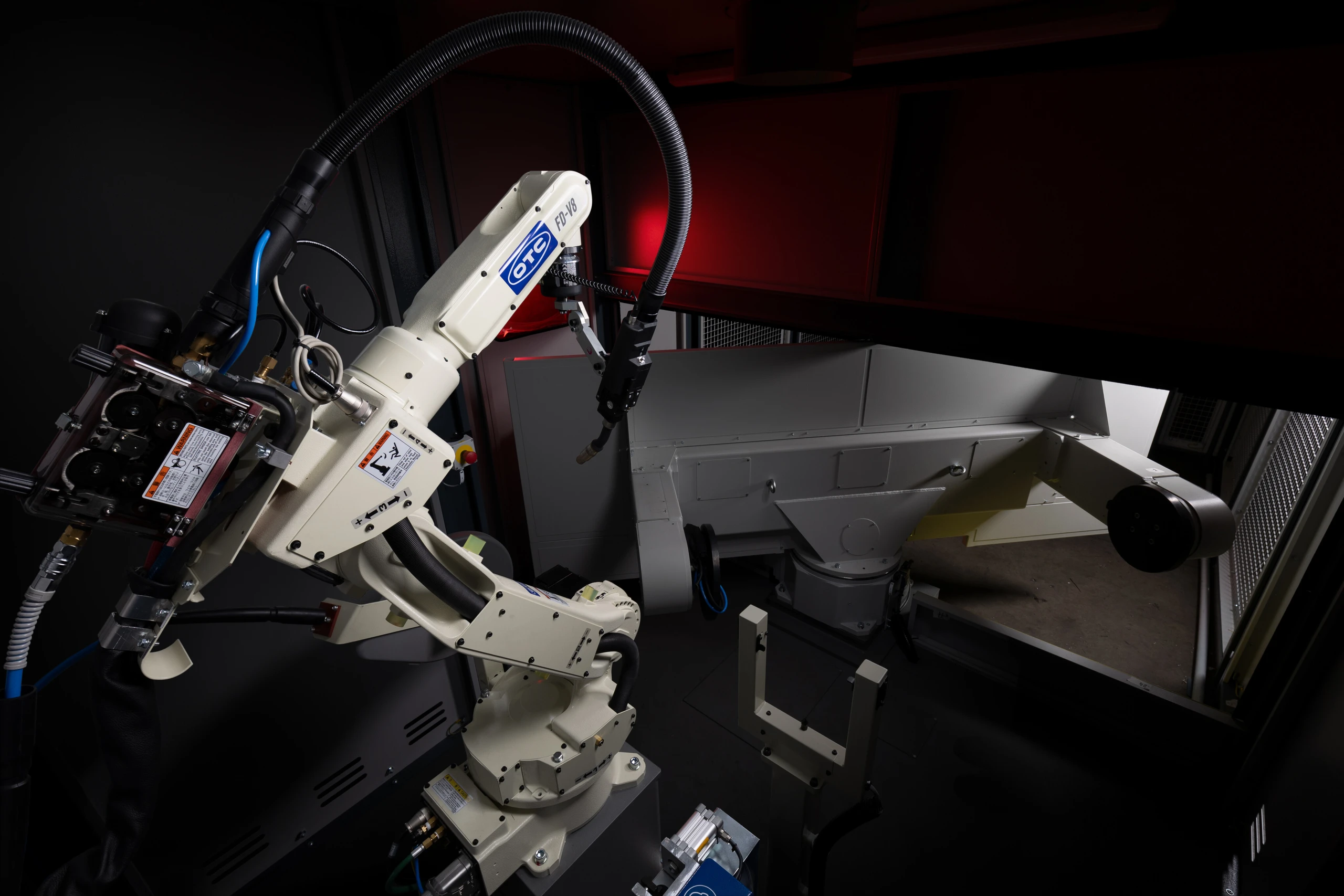
The solution for industrial-standard mass production
Cube
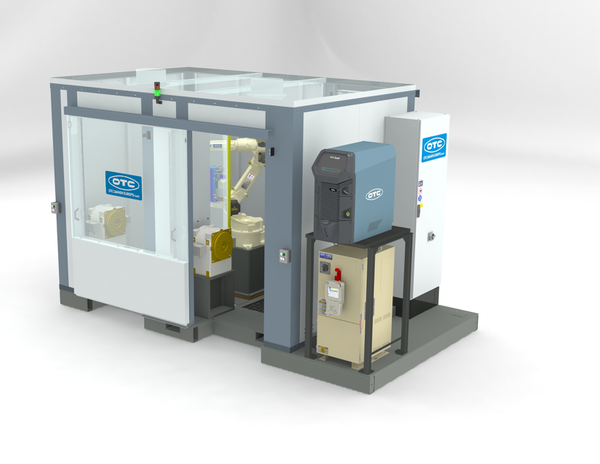
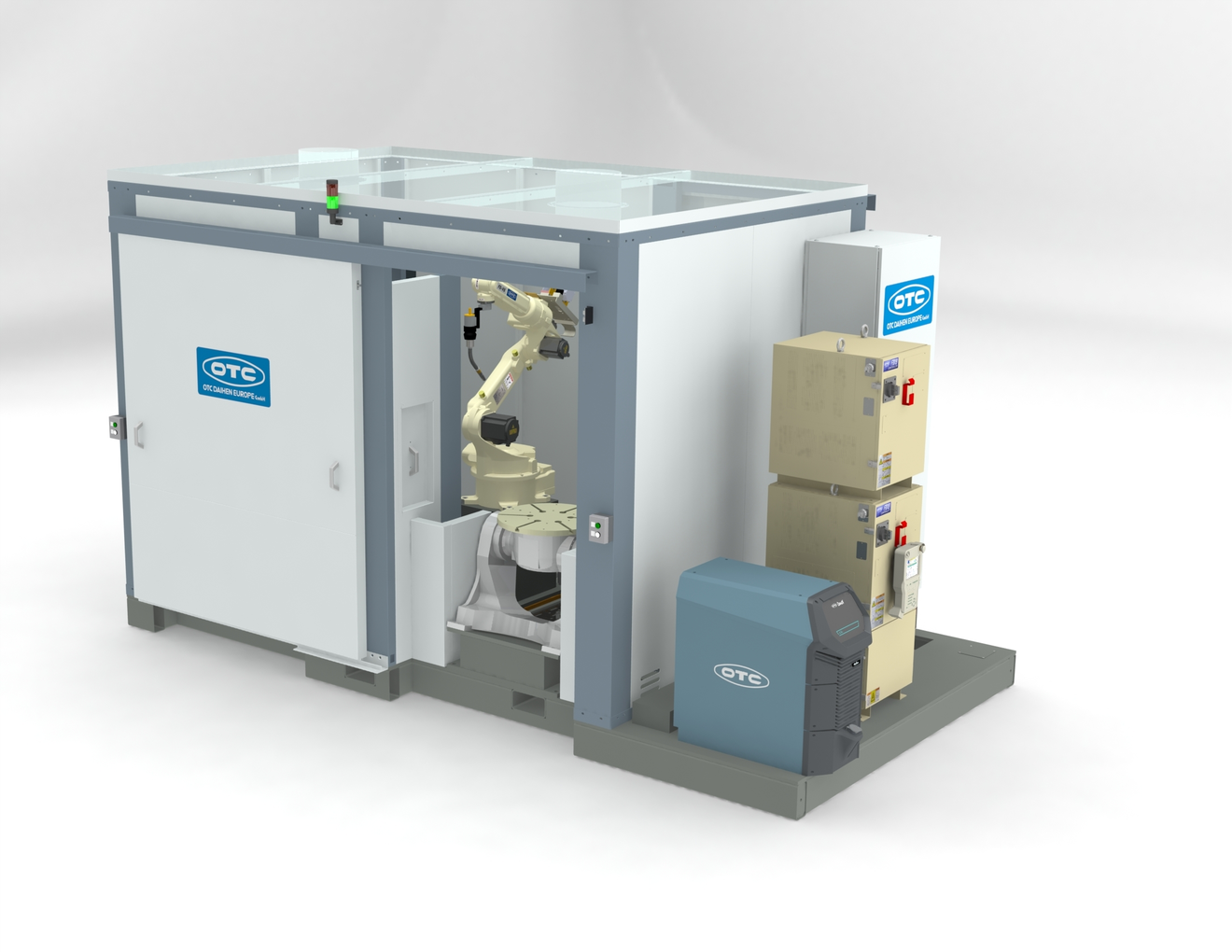
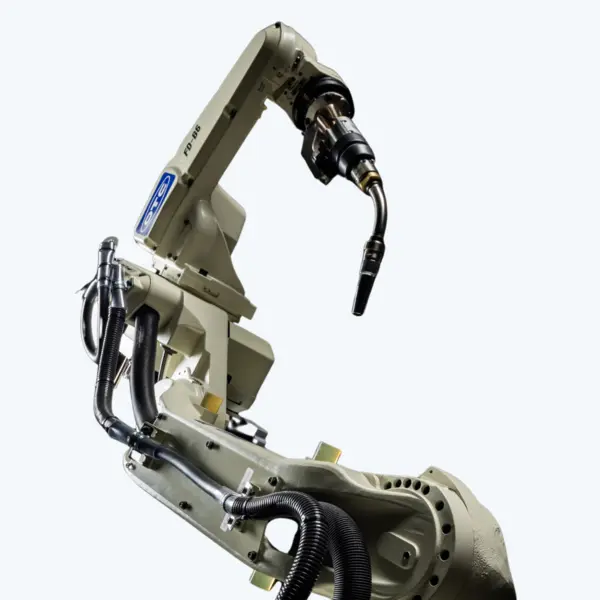
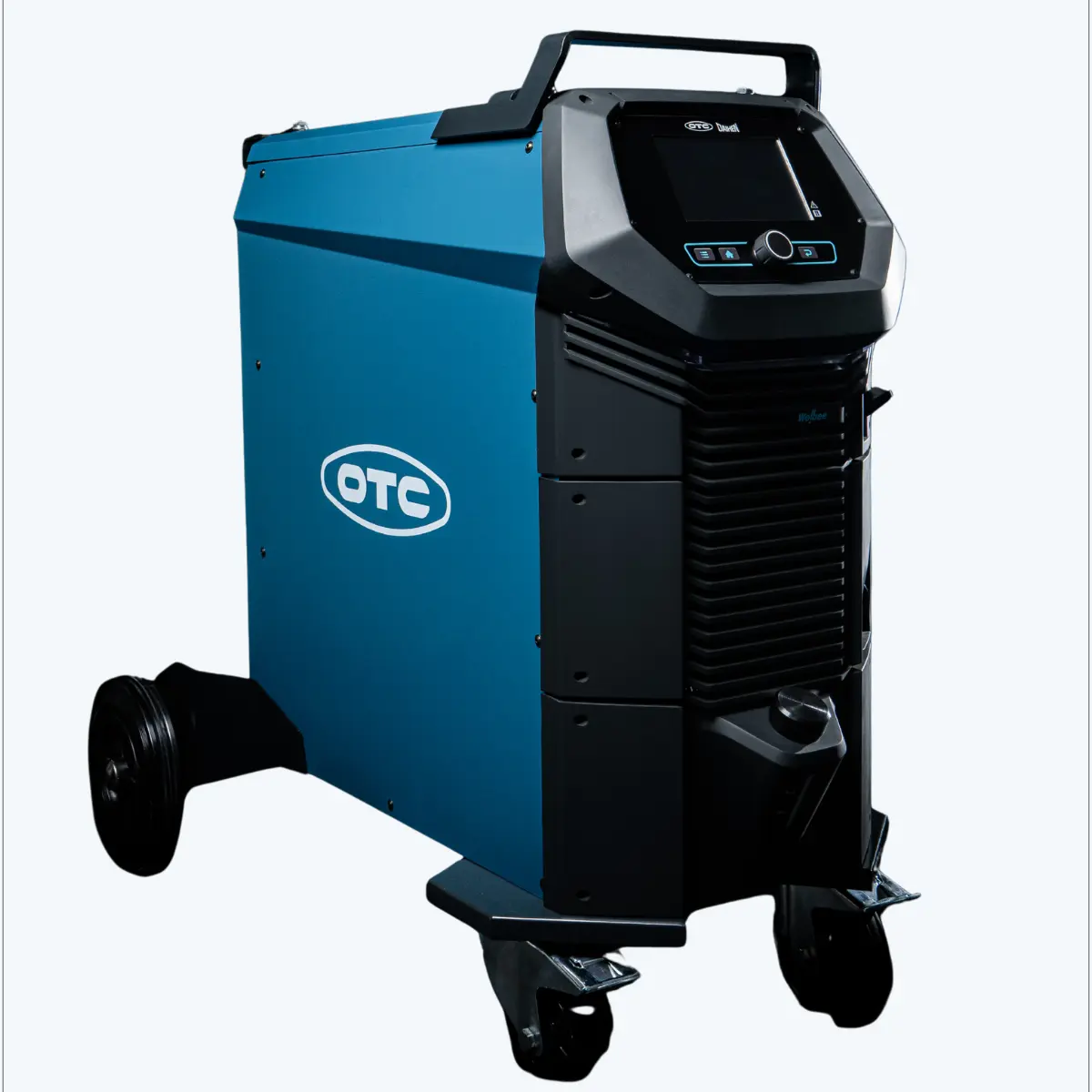
Our CUBEs are the high-end solution in our standard system range and are available in five different variants. They enable highly efficient welding production in cycle operation. The robot stations are designed to be extremely space-saving and are delivered ready for operation.
Footprint: 2.2 m x 4 m
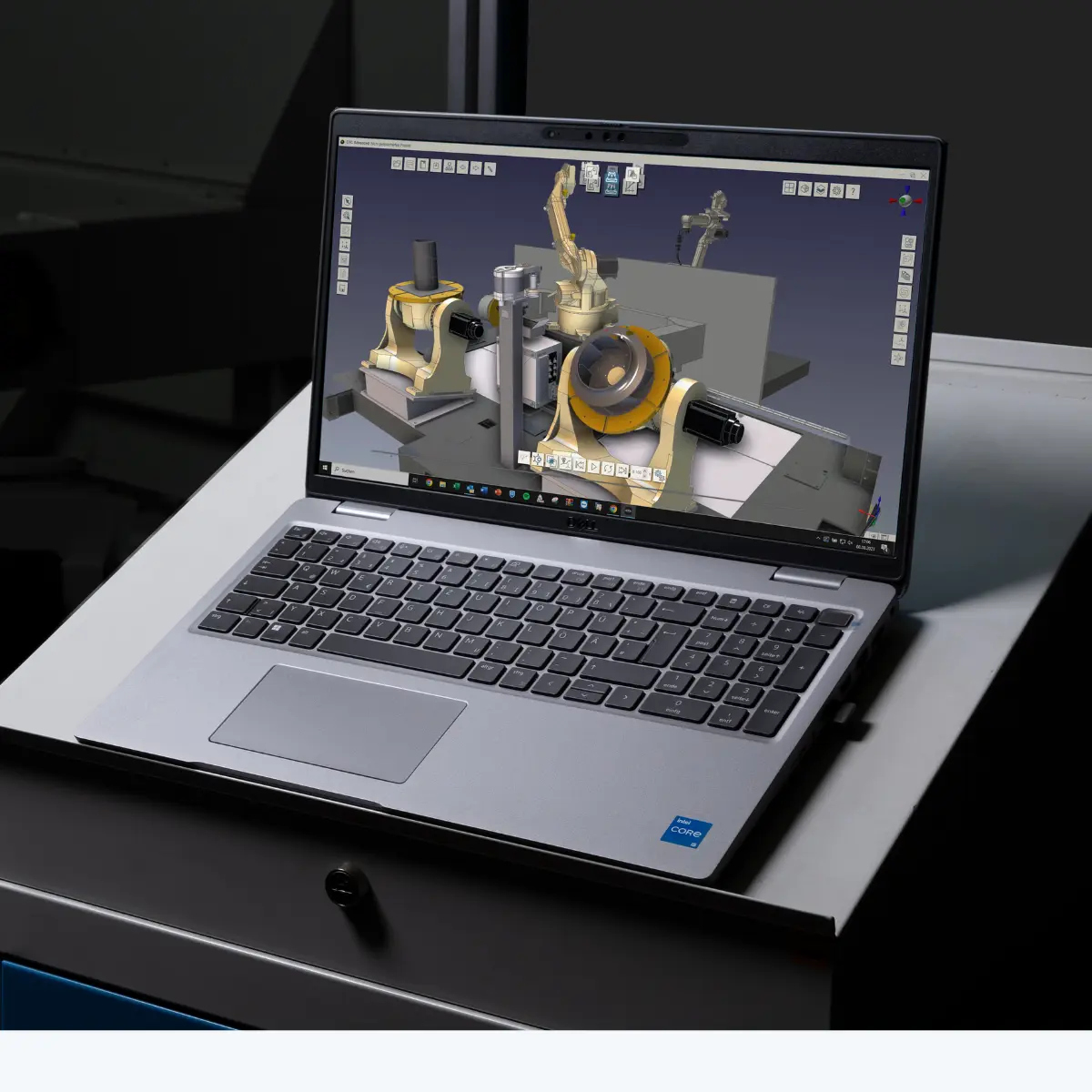
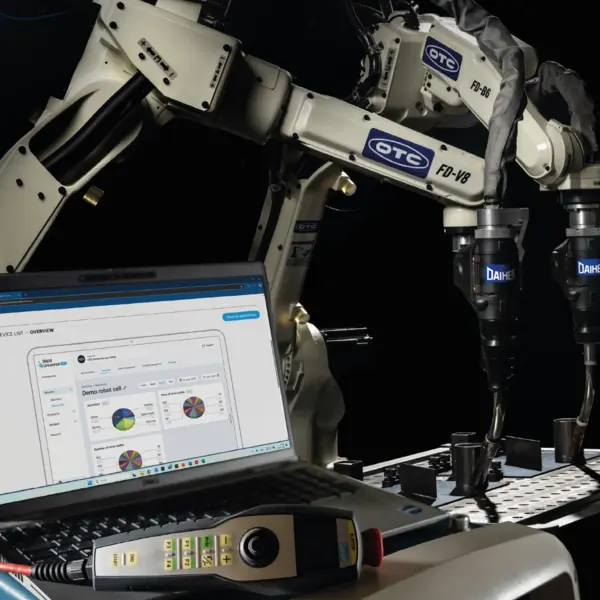
Options: Offline programming and digital twin
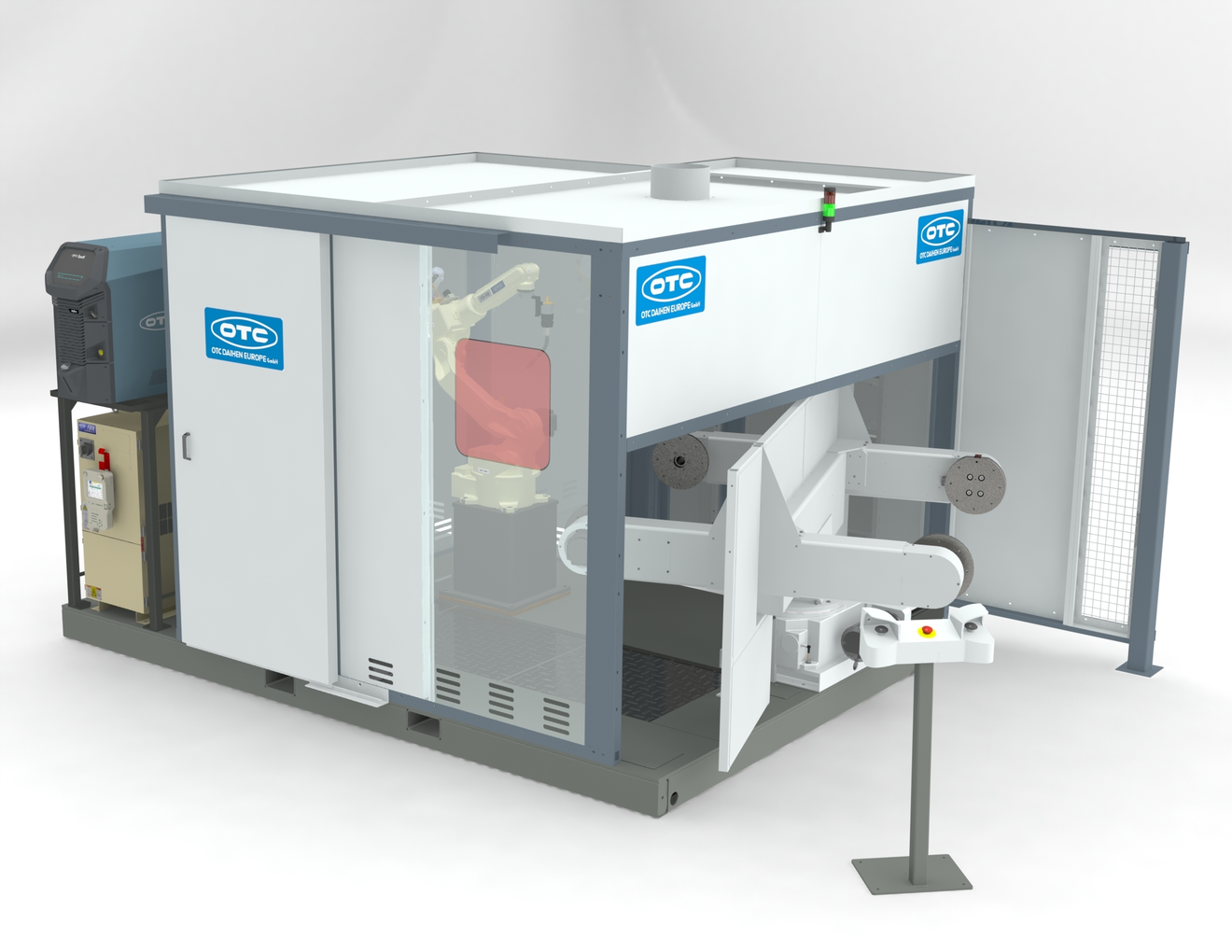
Five Versions
All CUBEs come standard with the following equipment:
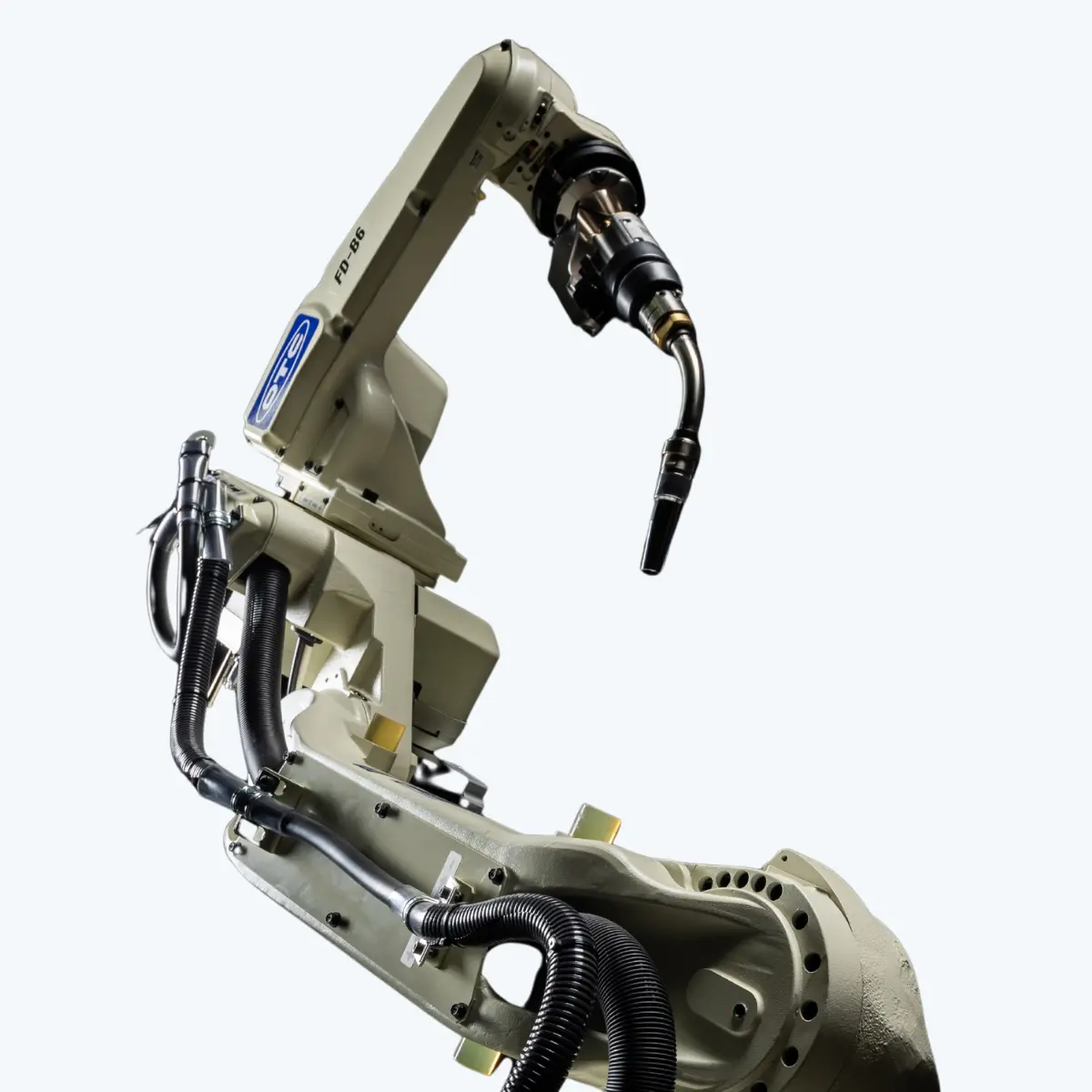
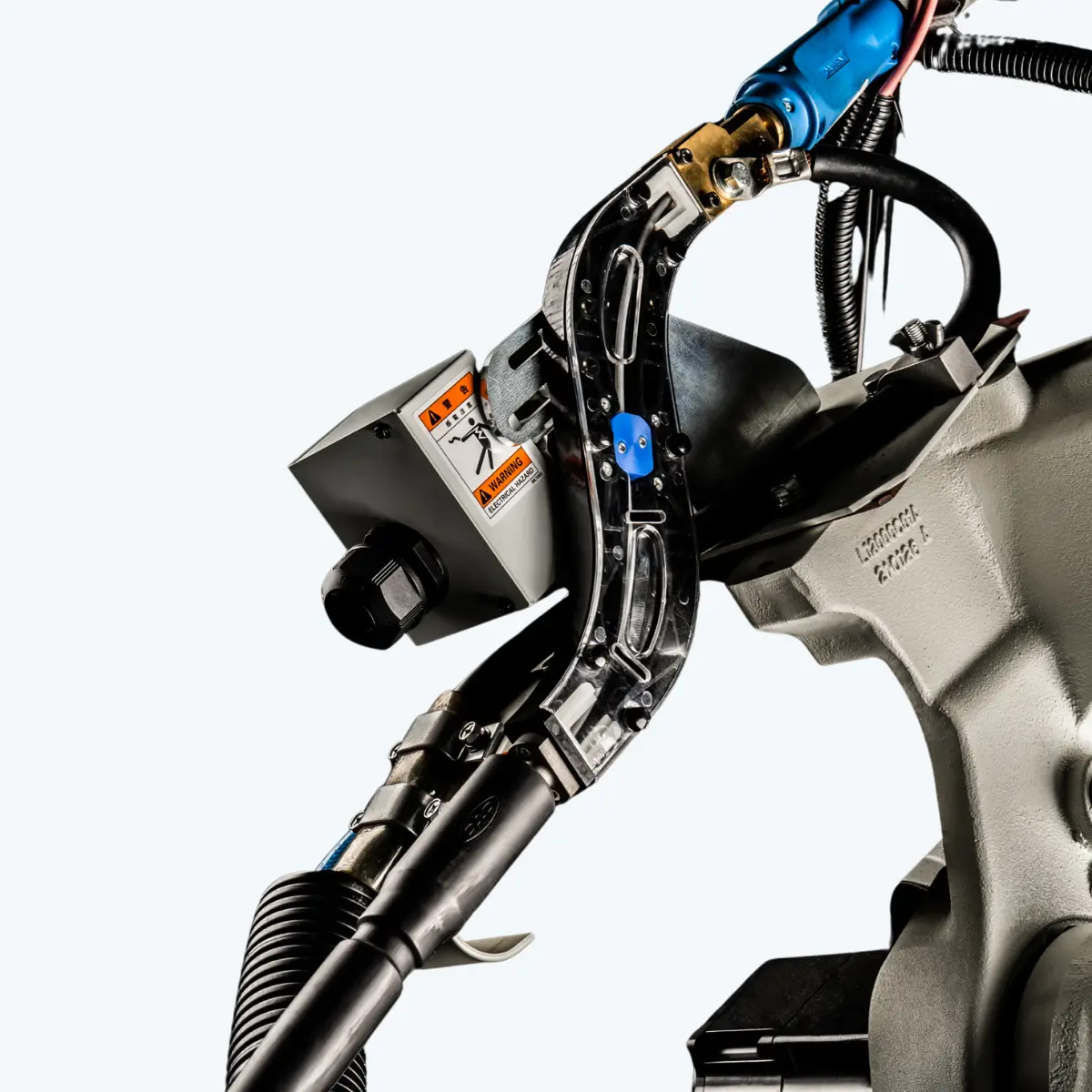
- Industrial robot
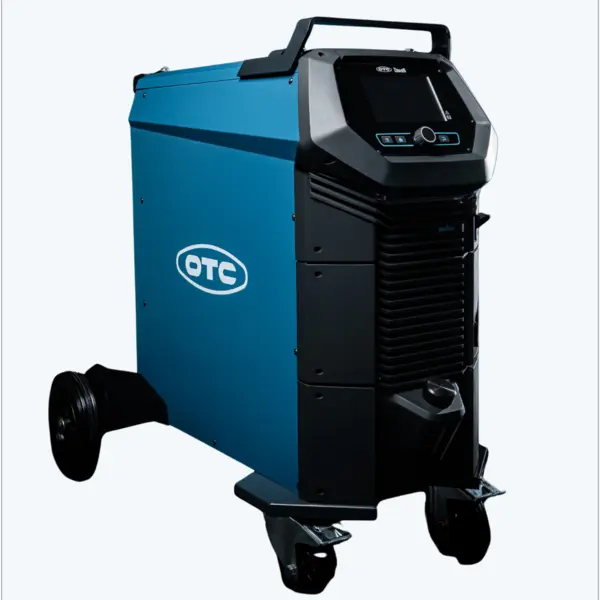
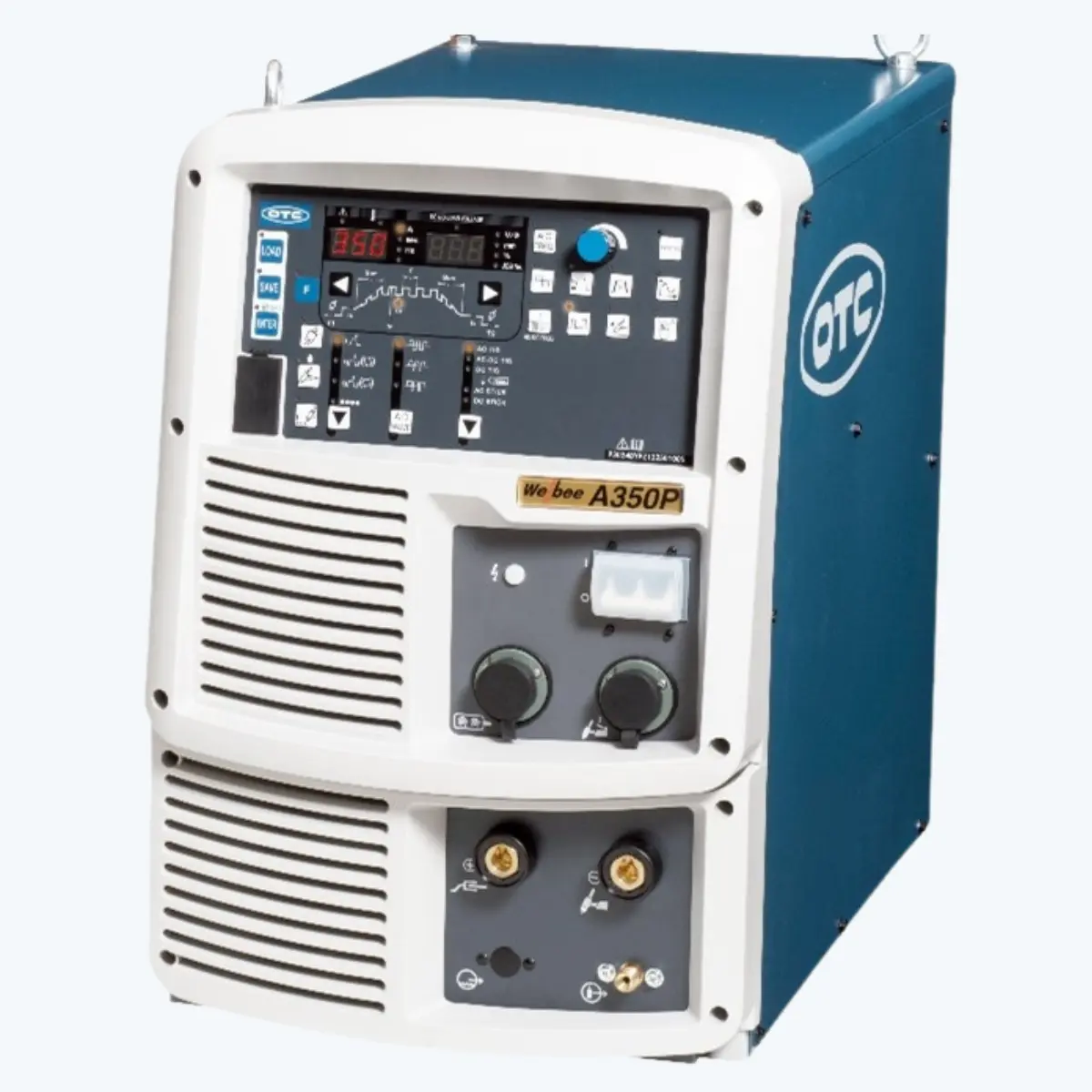
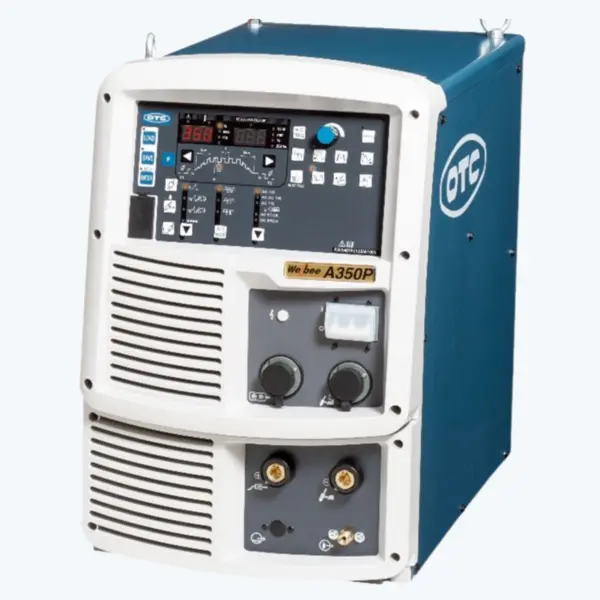
- Welding power source
- Welding equipment
- Positioning technology
- Control cabinet
- Safety technology
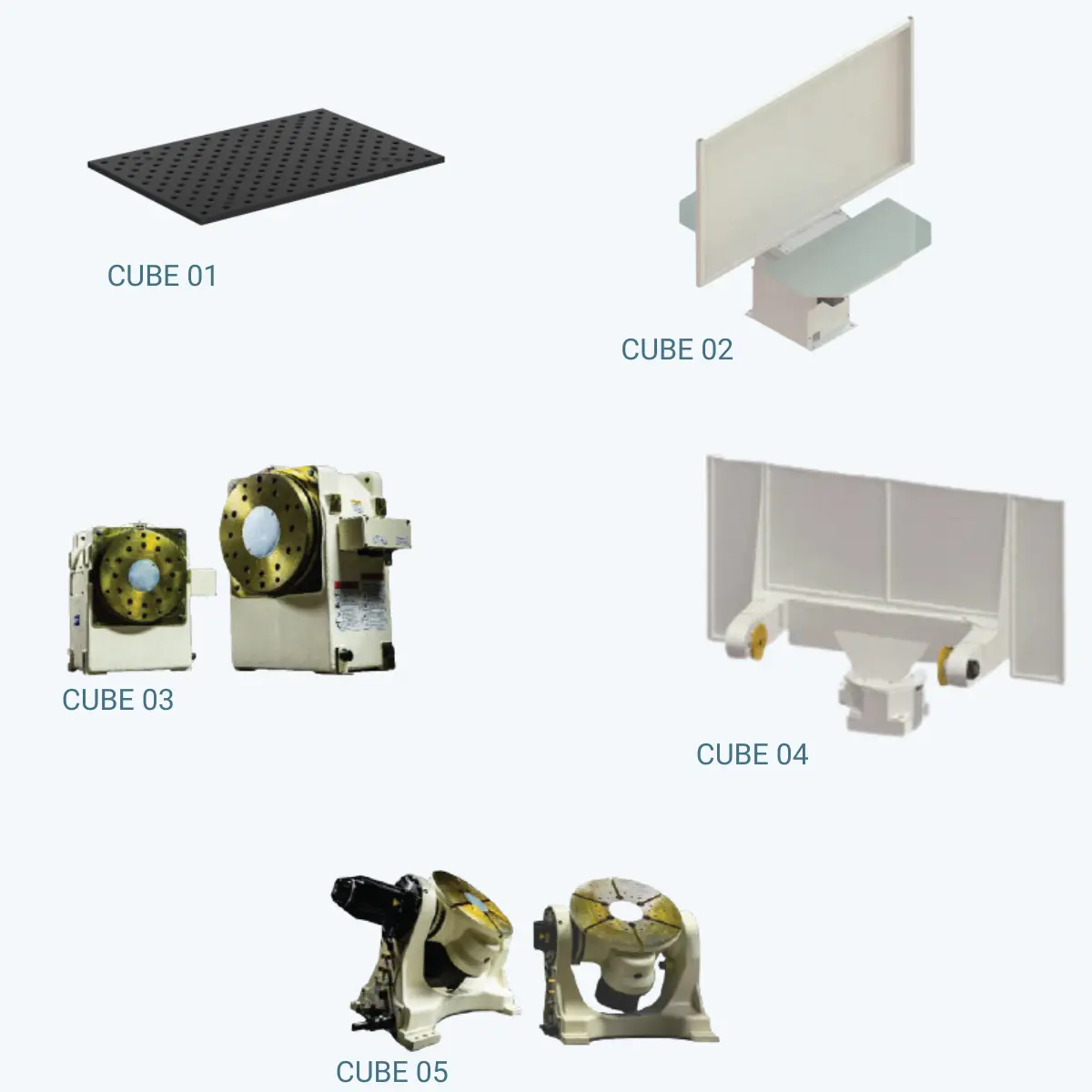
The CUBEs are available with five different positioning systems:
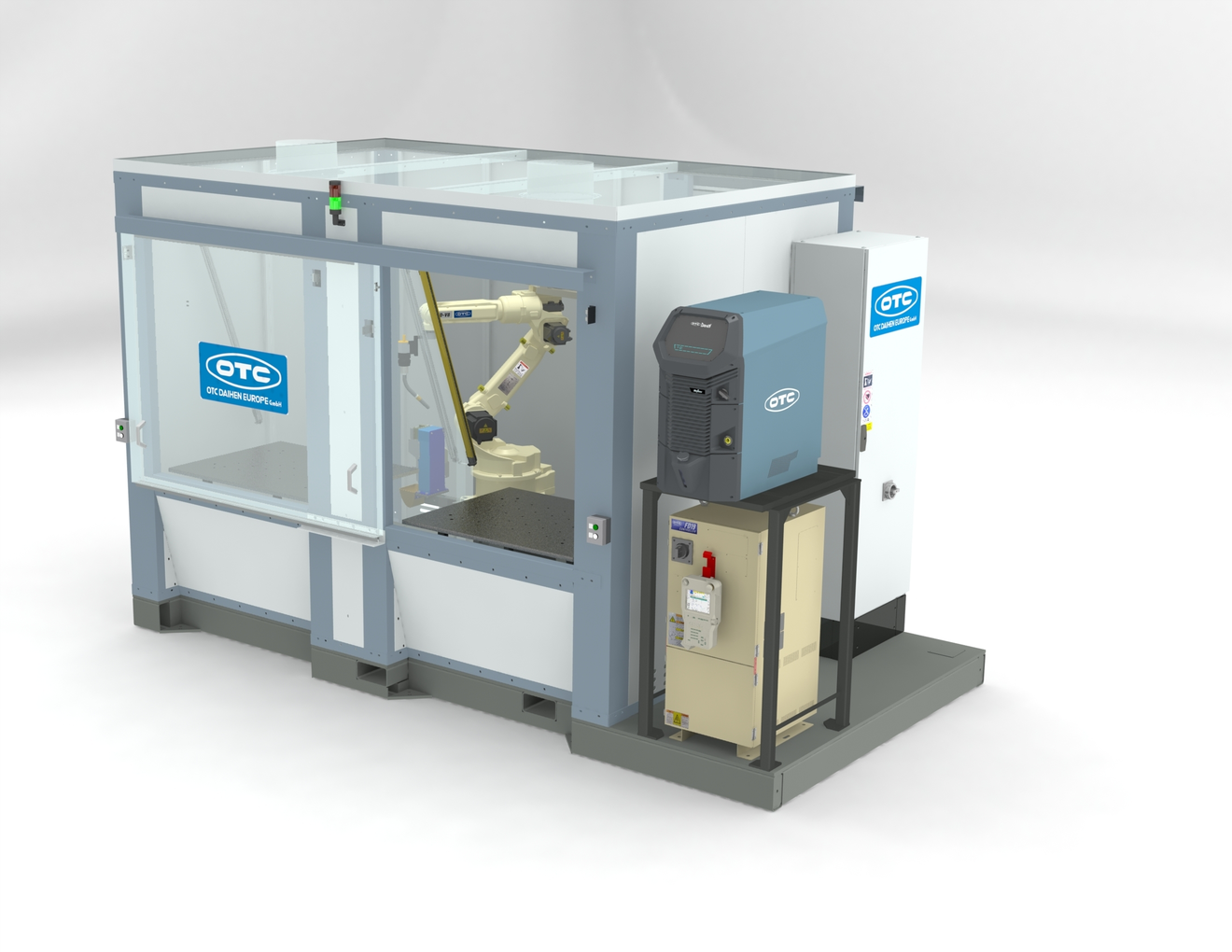
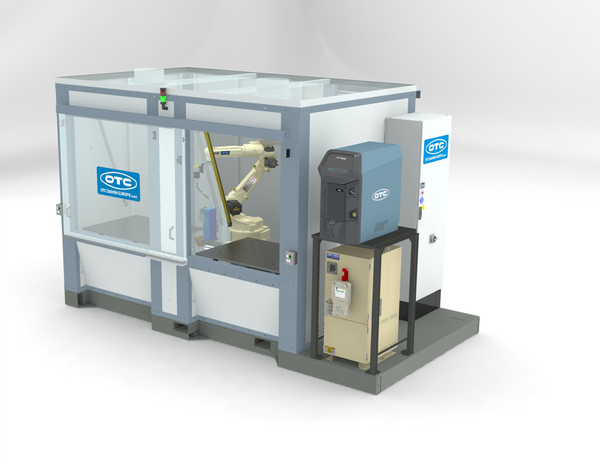
CUBE 01
Two fixed tables for mounting clamping fixtures
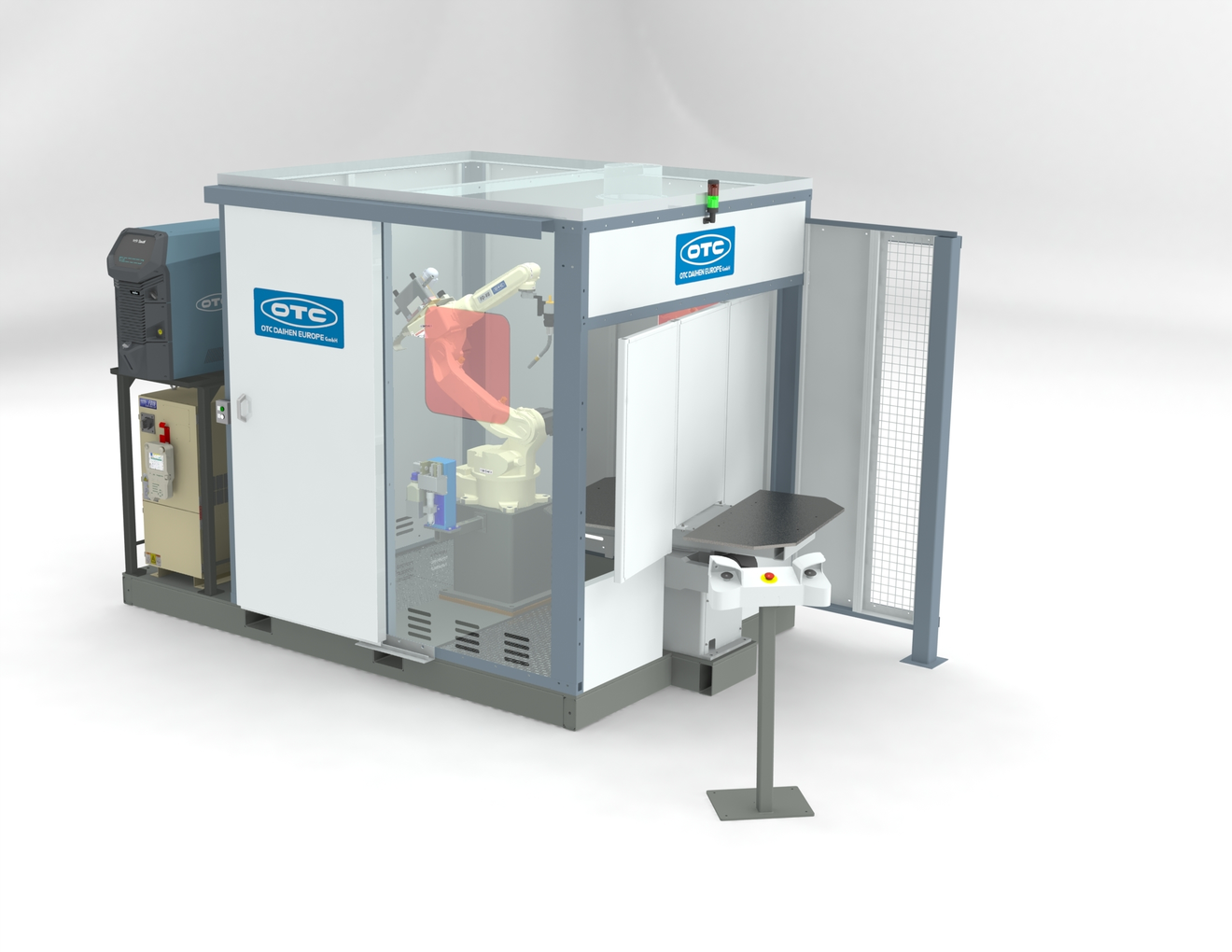
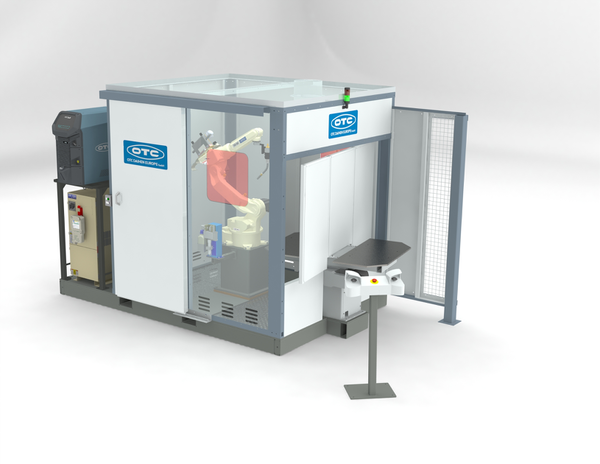
CUBE 02
Motor-driven reversible 180° indexing table for mounting clamping fixtures
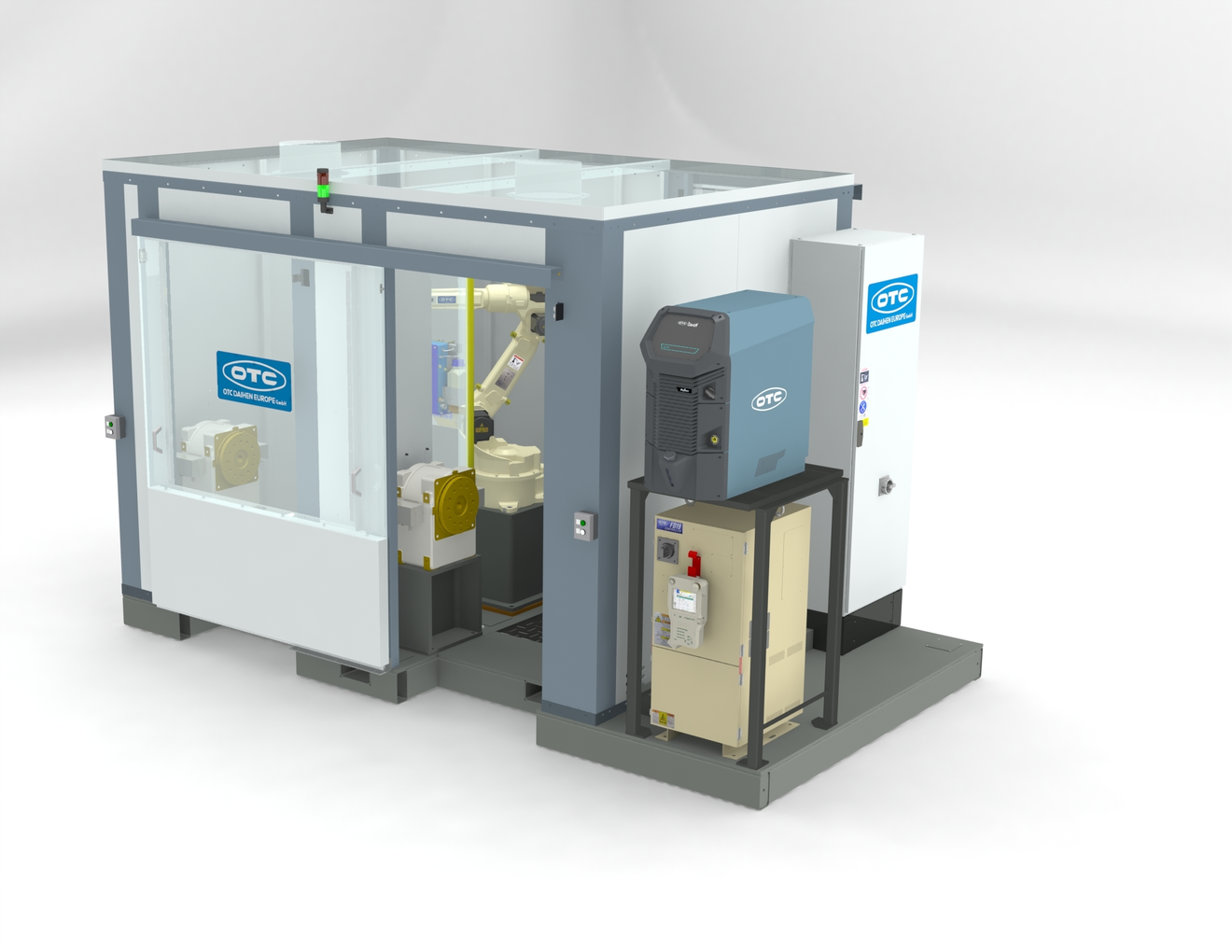
CUBE 03
2x horizontal rotary positioners in various payload classes (250, 500 and 1,000 kg), including tailstock units
CUBE 04
2-station horizontal rotary positioner available in various payload classes (250, 500 and 1,000 kg) and with different center distances
CUBE 05
2x 2-axis rotary/tilting positioners in various payload classes (250, 500 and 1,000 kg)
Option:
Offline-Programmierung mit digitalem Zwilling
The solution for industrial-standard mass production
CUBE – Your Additional Options


Jetzt Ihre CUBE Anfragen
Direct Contact
AddressOTC DAIHEN EUROPE GmbH
Krefelder Str. 675 - 677
41066 Mönchengladbach
Germany
Frequently Asked Questions About OTC CUBEs
FAQ
Would you like to learn more about OTC CUBEs and their use in automated welding? Here you will find answers to frequently asked questions about the design, functionality, benefits, applications, and integration of these compact robotic welding cells.
What is an OTC DAIHEN CUBE system?
An OTC DAIHEN CUBE system is a standardized robotic cell for automated welding production. This compact system solution combines a robot, welding technology, positioning technology, control system, and safety technology in a ready-to-operate system. With various CUBE versions available, the solution can be adapted to different workpieces and production requirements.
What are the advantages of an OTC CUBE welding system?
OTC CUBE systems combine automated robotic welding with a compact and standardized system design. They are designed for efficient welding production in cycle operation and, depending on the version, support different positioning and workpiece concepts. This helps achieve high productivity, reproducible processes, and efficient use of the available production space.
Which OTC CUBE versions are available?
The CUBE series is available in five versions: CUBE 01, CUBE 02, CUBE 03, CUBE 04, and CUBE 05. The versions differ primarily in their positioning technology – ranging from fixed worktables and a 180° indexing table to horizontal rotary positioners and 2-axis rotary/tilting positioners.
What is the difference between CUBE 01, 02, 03, 04, and 05?
CUBE 01 features two fixed tables for mounting clamping fixtures. CUBE 02 uses a motor-driven reversible 180° indexing table. CUBE 03 is equipped with two horizontal rotary positioners, while CUBE 04 uses a 2-station horizontal rotary positioner. CUBE 05 features two 2-axis rotary/tilting positioners, providing additional flexibility for workpiece orientation.
What applications are OTC CUBE systems suitable for?
OTC CUBE systems are suitable for automated welding production in industrial manufacturing environments. Thanks to the different positioning concepts, both smaller and larger workpieces as well as various component geometries can be processed. The appropriate CUBE version depends on the workpiece, payload, cycle time, and requirements of the respective welding process.
Which components are included in an OTC CUBE system?
As standard, CUBE systems include an industrial robot, a welding power source, welding equipment, positioning technology, a control cabinet, and the required safety technology. This brings together the essential components for automated robotic welding in a standardized system solution.
How much space does an OTC CUBE system require?
OTC CUBE systems are designed to be particularly space-efficient. OTC DAIHEN specifies a footprint of approximately 2.2 × 4 meters for the CUBE solution. This makes it possible to implement a high-performance automated welding cell within a comparatively compact production area.
What workpiece weights can be handled by an OTC CUBE system?
The possible payload depends on the selected CUBE version and positioning technology. Payload classes of 250, 500, and 1,000 kg are available for various positioner configurations. When designing the system, the workpiece weight as well as the clamping fixture, dimensions, center of gravity, and specific application must be taken into account.
What does cycle operation mean in a CUBE welding system?
In cycle operation, the individual work steps are organized so that welding and auxiliary times are coordinated as efficiently as possible. Depending on the system configuration, for example, a workpiece can be processed at one station while the next workpiece is already being prepared at another station. This helps reduce downtime and increase productivity.
Can an OTC CUBE system be equipped with multiple robots?
Depending on the system configuration, solutions with multiple robots are also possible. This allows complex welding tasks to be divided between robots and processing times to be optimized. The most suitable robot configuration depends on the component geometry, weld seams, required cycle time, and production volume.
Is offline programming available for OTC CUBE systems?
Yes. Offline programming with a digital twin is available as an option for OTC CUBE systems. This allows robot programs and motion sequences to be prepared and simulated virtually. It can help move programming work outside of ongoing production and reduce downtime on the actual system.
What are the advantages of a digital twin for a CUBE system?
A digital twin creates a virtual representation of the robotic cell and enables the simulation of robot movements and production processes. Programs can be prepared, motion sequences can be verified, and potential collisions can be identified before the programs are transferred to the actual system. This supports efficient planning and programming of welding production.
Which CUBE system is right for my production?
The appropriate CUBE version depends on the specific welding task. Important selection criteria include workpiece size and weight, component geometry, required positioning movements, production volume, cycle time, and the desired level of automation. Based on these factors, the appropriate combination of robot, positioner, and welding technology can be selected.
Which companies can benefit from an automated CUBE welding system?
A CUBE system is particularly suitable for companies looking to automate repetitive welding tasks and increase their production capacity. Thanks to their standardized and scalable system structure, CUBE systems are especially well suited for series production and applications with high requirements for productivity and reproducible welding processes.