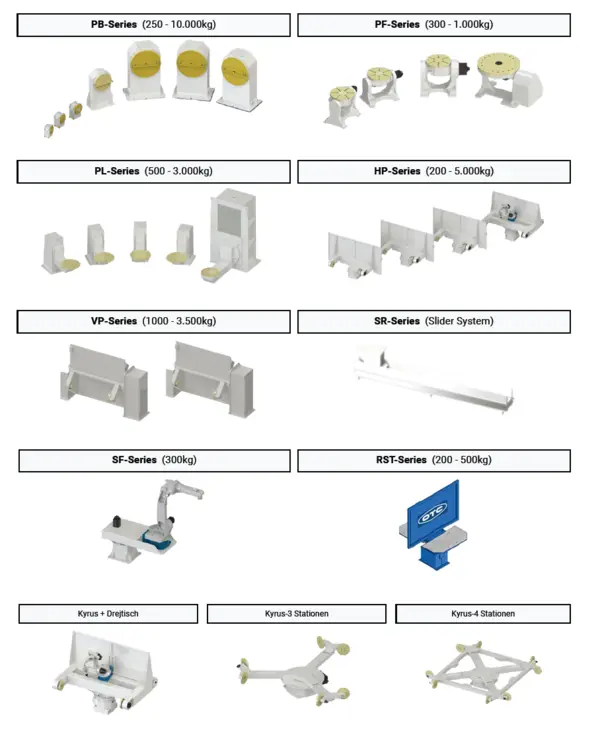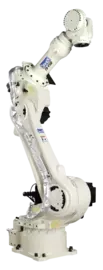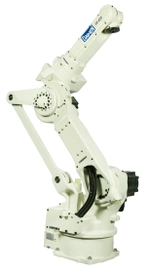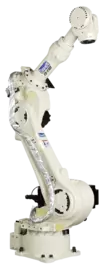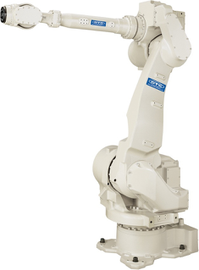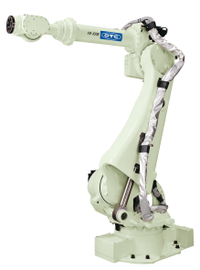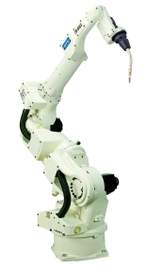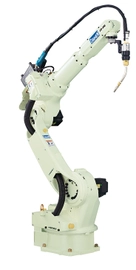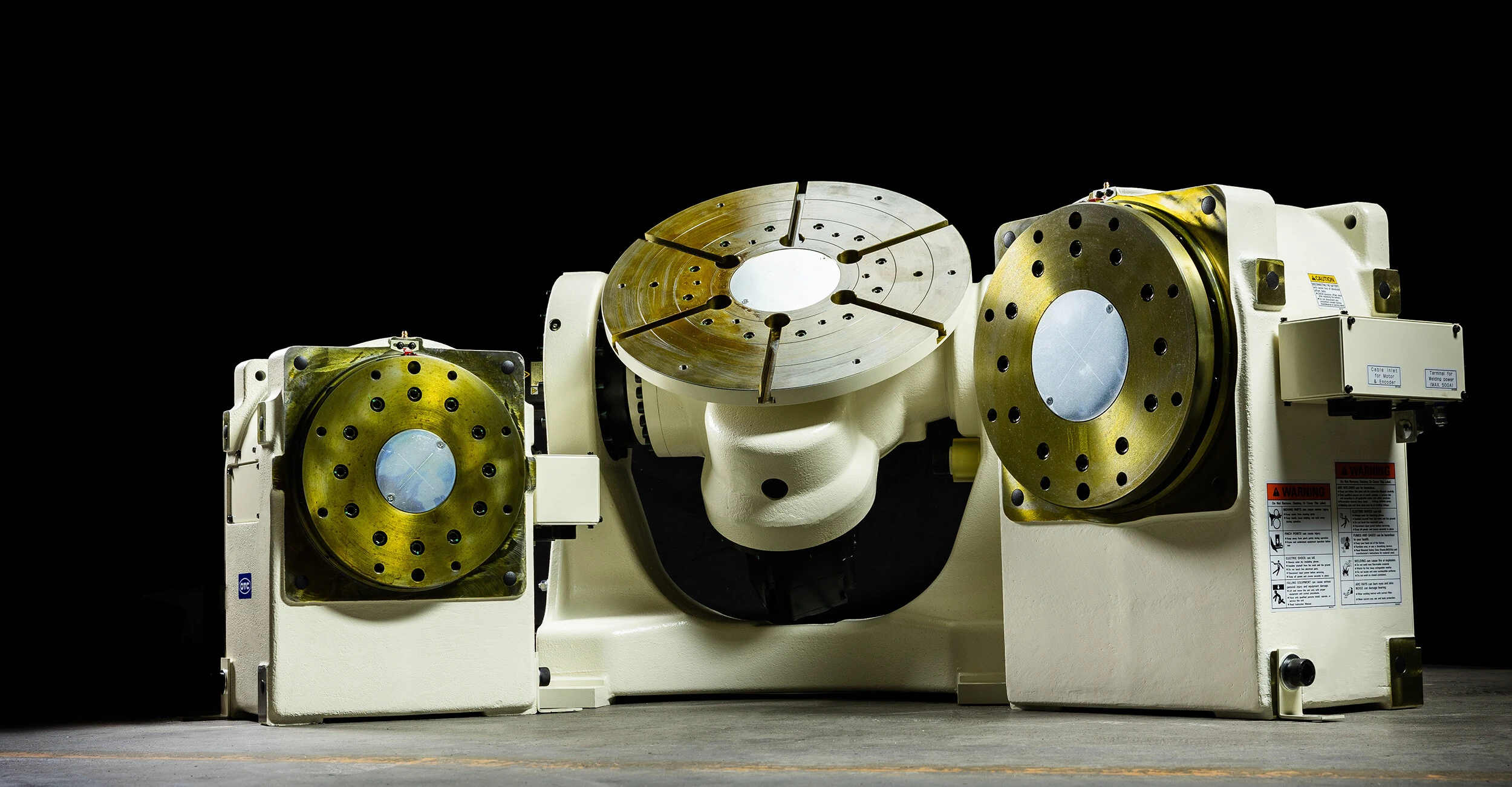
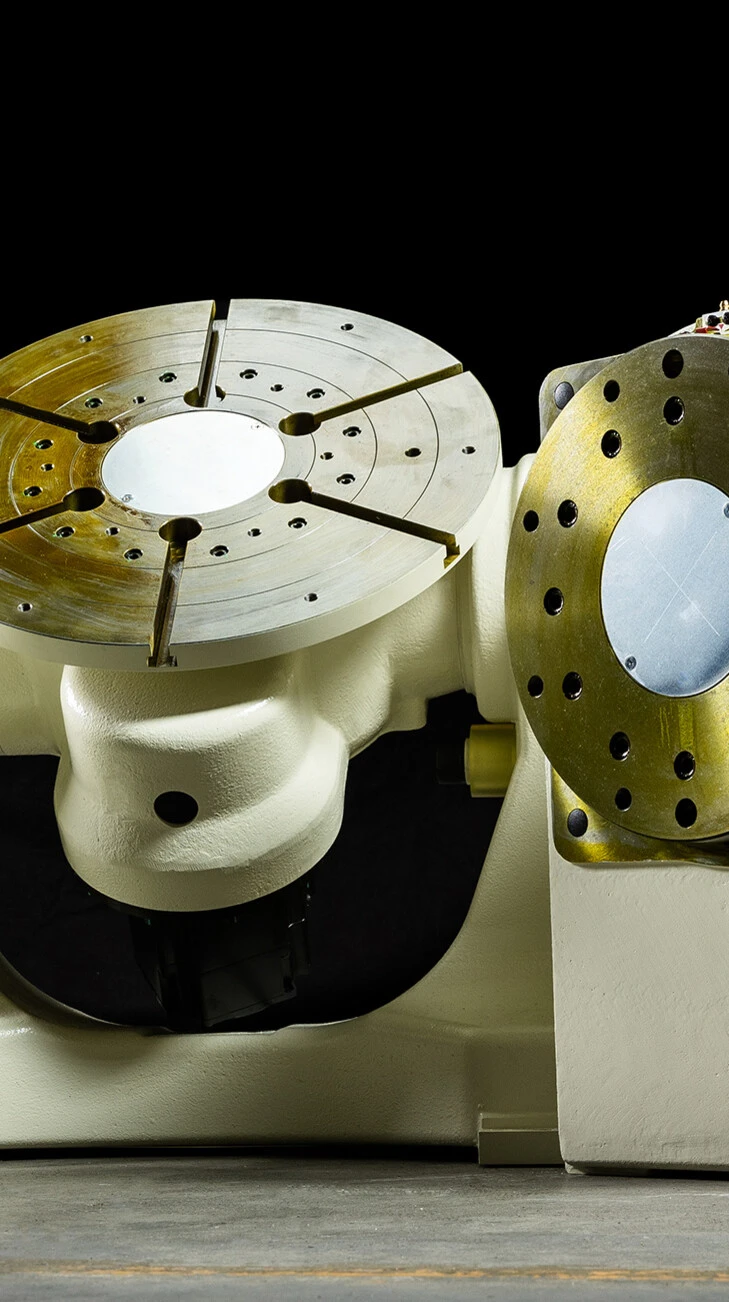
work in the optimum position
OUR OTC DAIHEN POSITIONERS
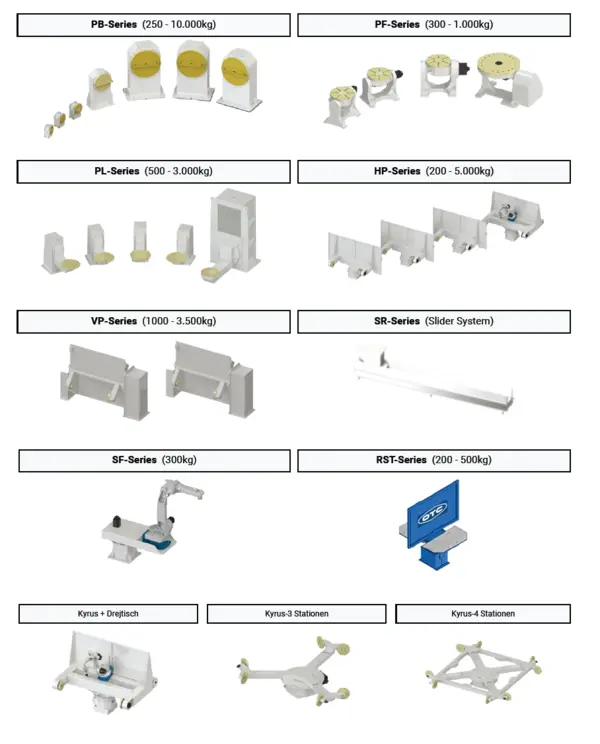
OTC DAIHEN positioners are easy and quick to program because they are connected to our robot controllers. The positioners are designed to grant a maximum usage of the workspace while keeping the optimal machining position for the specific task like arc welding or cutting and other applications.
Improvements to your system
Improved efficiency
- Allows faster and more efficient machining or welding of workpieces
- Reduced need for manual repositioning and reducing the overall machining time
Increased precision
- Allows precise positioning of the workpiece, essential for accurate machining or welding
Enhanced safety
- Improves safety in the workplace by reducing the need for manual handling
- Reduces the risk of operator injury from repetitive or strenuous movements
Versatility
- Can be used in a variety of machining and welding applications
- Can handle a wide range of workpiece sizes and shapes
- Available for both horizontal and vertical movements
Cost savings
- Reducing the need for additional equipment or tools
- Increasing productivity and efficiency in the workplace
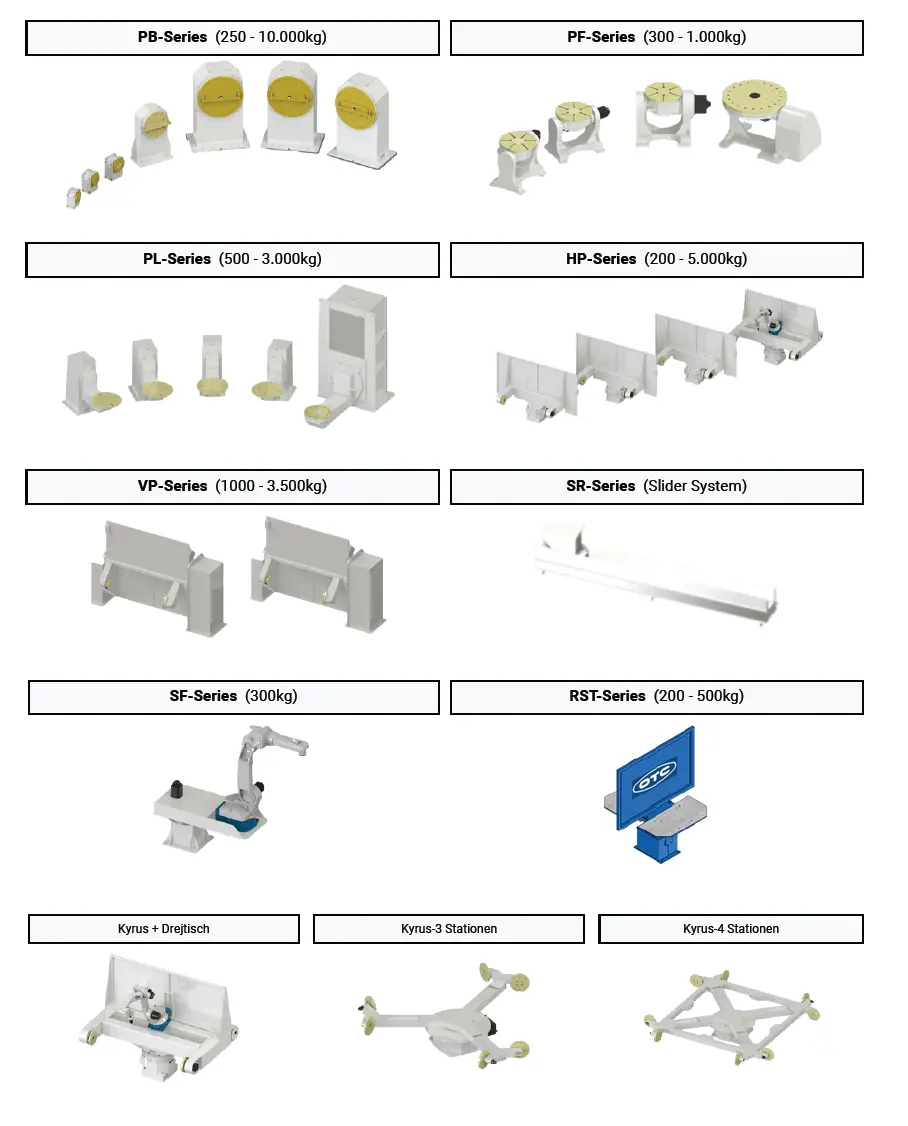
Frequently Asked Questions About Welding Positioners
FAQ
Would you like to learn more about welding positioners and their use in automated welding? Here you will find answers to frequently asked questions about the functionality, advantages, selection and integration of positioners in robotic welding systems.
What is a welding positioner?
A welding positioner moves and positions workpieces during the automated welding process. By rotating, tilting or positioning the workpiece, the weld seam can be moved into a suitable position for the welding robot. This improves accessibility and enables efficient processing of different workpieces.
What are the advantages of OTC DAIHEN welding positioners?
OTC DAIHEN welding positioners enable precise workpiece positioning and reduce the need for manual repositioning. This can shorten processing times, improve accessibility for the robot and make automated welding processes more efficient.
What applications are welding positioners suitable for?
Welding positioners are particularly suitable for automated welding applications where workpieces need to be precisely aligned or moved during the process. Positioners can also be used for other automated processing applications, such as cutting.
How do I choose the right welding positioner?
Selecting the right welding positioner depends on the specific application. Important criteria include the weight and dimensions of the workpiece, its center of gravity, the fixture, the required range of motion and the desired positioning during the welding process.
What payload capacity should a welding positioner have?
The required payload capacity depends on more than just the weight of the workpiece. The weight of the fixture as well as the dimensions and center of gravity of the total load must also be taken into account when designing the system. The positioner should therefore be selected to suit the specific application and system configuration.
Can OTC DAIHEN positioners be synchronized with a welding robot?
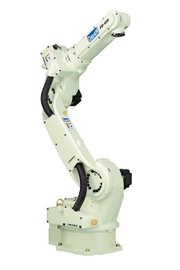
Yes. Positioners can be integrated into an OTC DAIHEN robot system as external axes. Depending on the system configuration, the movements of the positioner can be performed simultaneously or synchronized with the robot. This makes it possible to implement complex motion sequences in automated welding applications.
Why is workpiece positioning important in robotic welding?
Proper workpiece positioning makes it easier for the welding robot to access the weld seam and helps maintain consistent torch movement. By positioning the workpiece precisely, difficult-to-reach areas can be made more accessible and favorable welding positions can be achieved.
Can different workpiece sizes and shapes be positioned?
Yes. Depending on the positioner type and system configuration, different workpiece sizes and shapes can be accommodated. Key factors include the payload capacity, workpiece dimensions, center of gravity, clamping concept and the range of motion required for processing.
Can a welding positioner increase productivity?
A welding positioner can help reduce manual repositioning and the associated non-productive time. At the same time, the workpiece can be moved into a suitable processing position during the automated process. This supports efficient workflows and can increase the productivity of the robotic system.
Can an OTC DAIHEN welding positioner be integrated into an existing robot system?
Integration into existing automation systems is generally possible, but must be evaluated for the specific system. Key factors include the existing robot controller, interfaces, safety requirements, available space and the required positioner functionality.