Unleash the potential of automation with one additional axis
NEWEST GENERATION OF 7-AXIS ROBOTS
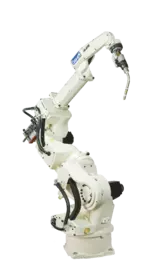
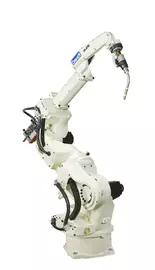
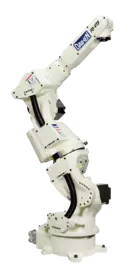
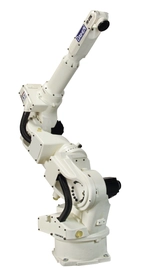
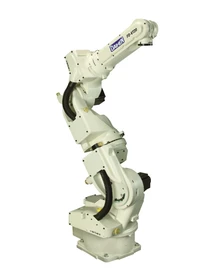
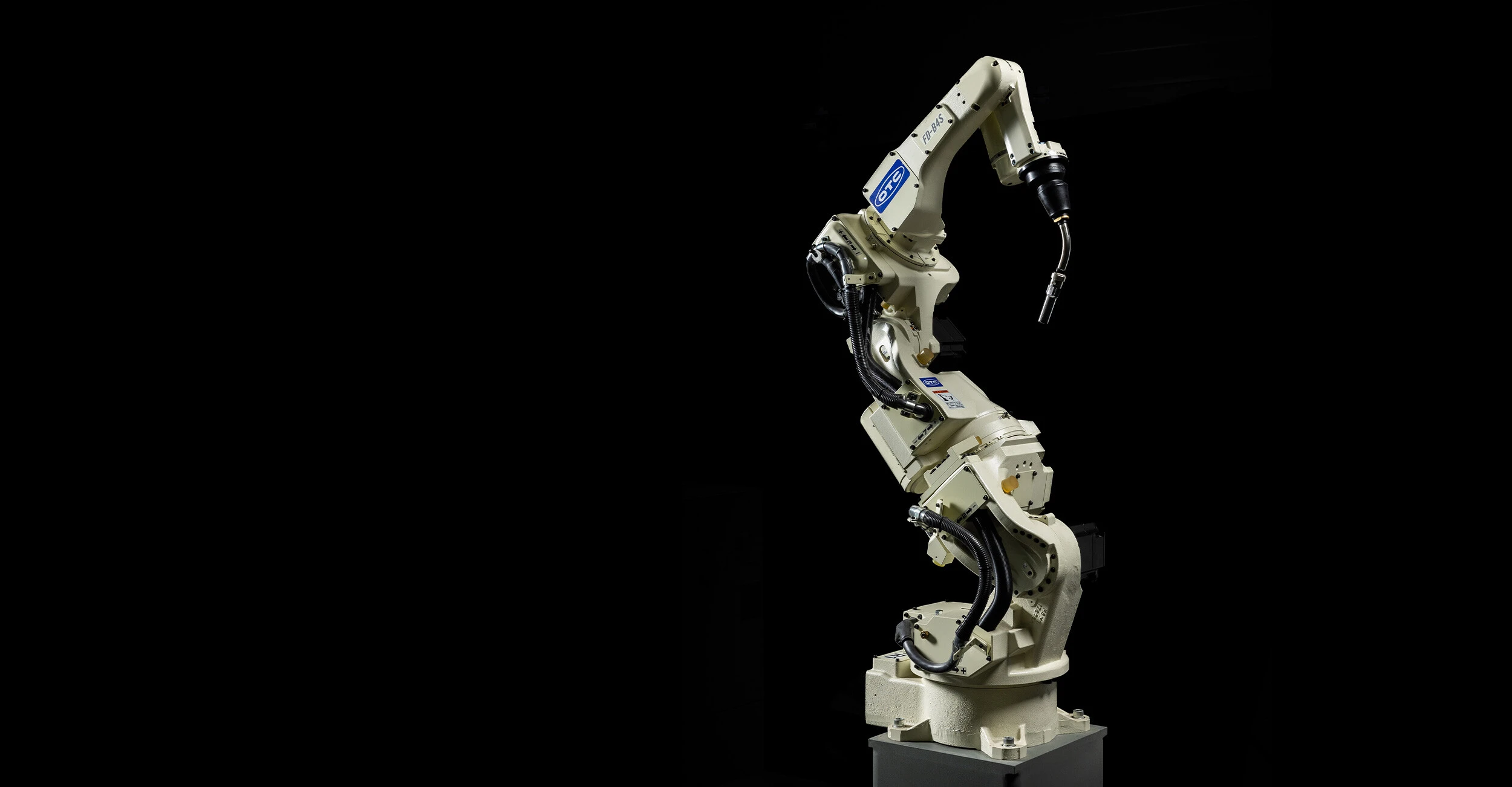
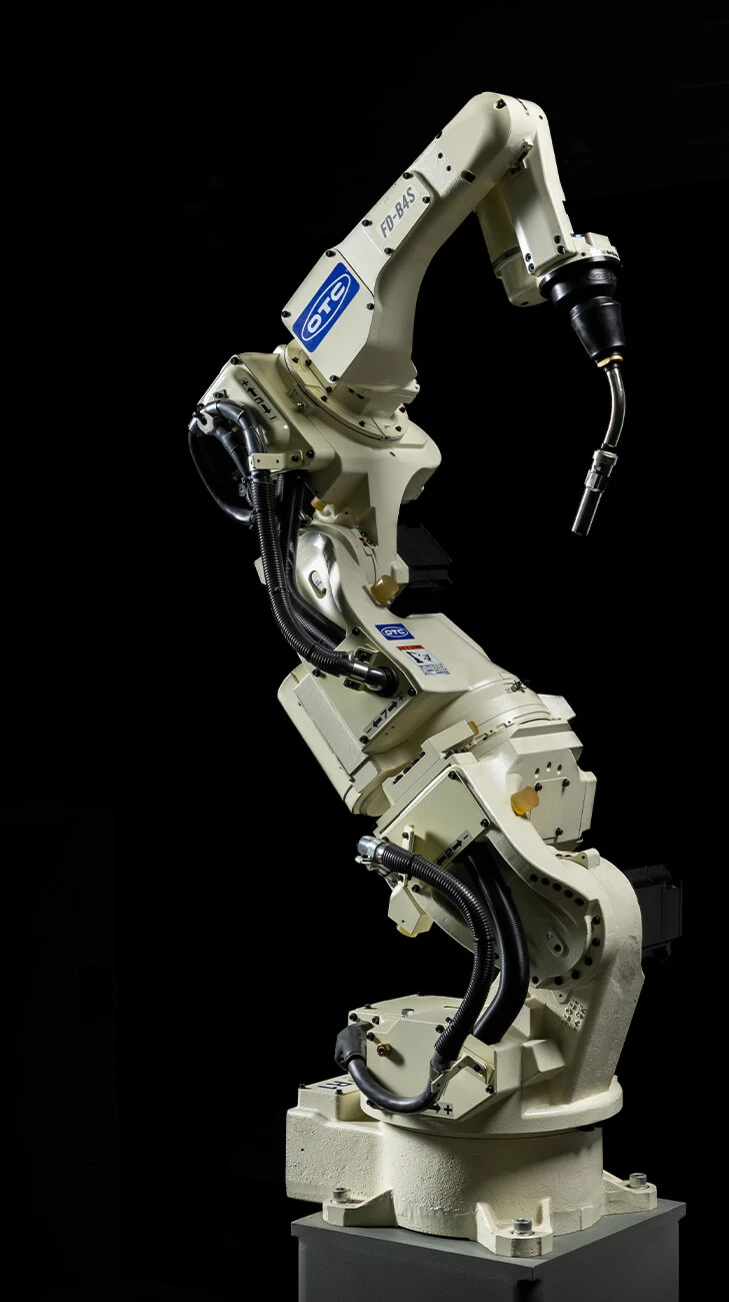
For applications involving components with complex accessibility requirements, we offer our specialized 7-axis robot series. The additional seventh axis extends the robot’s range of motion and provides greater flexibility for demanding welding tasks and complex component geometries. All models can be extended with external axes for Synchromotion as well as various communication interfaces. In addition, selected models are also available in long-arm versions, providing an extended working range. With various models in the medium payload class, OTC DAIHEN offers a versatile 7-axis robot portfolio for a wide range of automated welding applications.
Quick facts
- highest maneuverability in the working range
- highest robot density per installation space
- better EOAT (end of arm tool) positioning and stability
- seven fully synchronized axes
7-Axis Robots for Flexible Welding Automation
The additional seventh axis extends the robot’s range of motion and enables particularly flexible positioning of the robot arm. This allows 7-axis robots to adapt their posture to the specific welding task and reach different areas of a workpiece. This provides additional possibilities when designing automated welding processes and can be particularly advantageous for complex system layouts.
Our 7-Axis Medium Payload Robots are available in various configurations. This allows the appropriate robot model to be selected according to the specific welding task, required working range and system configuration.
Our 7-Axis Robots
BT6 | VT8 | BT6L | VT8L | VT20
With its range of models, OTC DAIHEN offers a versatile portfolio for automated welding applications. Selected models are also available in long-arm versions, providing additional options for applications that require a larger working range.
Frequently Asked Questions About 7-Axis Robots
FAQ
Would you like to learn more about our 7-axis robots and their use in automated welding? Here you will find answers to frequently asked questions about the operation, advantages, selection and integration of 7-axis robots in our welding systems.
What is an OTC DAIHEN 7-axis robot?
An OTC DAIHEN 7-axis robot is an industrial robot with seven controlled axes of motion, providing one additional axis compared to conventional 6-axis robots. This additional freedom of movement enables particularly flexible robot movements and can help perform complex welding, handling and automation tasks efficiently, even where space is limited.
What are the advantages of an OTC DAIHEN 7-axis robot?
The key advantage of an OTC DAIHEN 7-axis robot is its additional freedom of movement. It enables alternative robot positions and motion paths without necessarily changing the position of the tool relative to the workpiece. This can be particularly beneficial for complex component geometries, difficult-to-access weld seams and compact robot cells.
What is the difference between an OTC DAIHEN 6-axis and 7-axis robot?
A 6-axis robot has six controlled axes, while an OTC DAIHEN 7-axis robot has an additional axis of motion. This provides greater kinematic flexibility. Particularly for complex welding tasks, the seventh axis can provide additional movement options and help the robot avoid obstacles or achieve favorable positions within the working area.
Why are OTC DAIHEN 7-axis robots particularly suitable for robotic welding?
In automated welding, the torch position, torch angle and welding path must be precisely aligned with the workpiece. The additional freedom of movement provided by a 7-axis welding robot offers greater flexibility when positioning the robot along complex components. Combined with OTC DAIHEN welding technology, this enables powerful welding automation solutions tailored to the specific application.
What applications are OTC DAIHEN 7-axis robots suitable for?
OTC DAIHEN 7-axis robots are particularly suitable for demanding automation tasks that require a high degree of freedom of movement. Typical applications include automated arc welding as well as handling and positioning tasks. 7-axis technology is especially beneficial for complex workpieces, difficult-to-reach processing positions or applications with limited space inside a robot cell.
Can OTC DAIHEN 7-axis robots be used in confined spaces?
The additional axis can make a 7-axis robot more flexible within its available working area. Depending on the application, this can enable compact system layouts and alternative robot positions. However, whether this actually reduces the space required compared to another robot configuration depends on the workpiece, reach, peripheral equipment, safety distances and the overall system design.
Which welding processes can be automated with OTC DAIHEN 7-axis robots?
Depending on the robot, welding equipment and system configuration, OTC DAIHEN 7-axis robots can be used for automated arc welding processes. These include MIG/MAG welding applications, for example. The appropriate combination of robot, welding power source, torch and peripheral equipment depends on the material, component geometry, welding task and the required quality and productivity targets.
When should I choose an OTC DAIHEN 7-axis robot instead of a 6-axis robot?
A 7-axis robot can be particularly beneficial when a 6-axis robot reaches its kinematic limits due to complex component geometries, restricted accessibility or space constraints. The additional axis extends the robot’s range of motion and can simplify path planning for demanding applications. Which option is more suitable from a technical and economic perspective should be evaluated based on the workpiece, welding process, working area, required reach and desired cycle time.
Discover more